 Fareham Creek
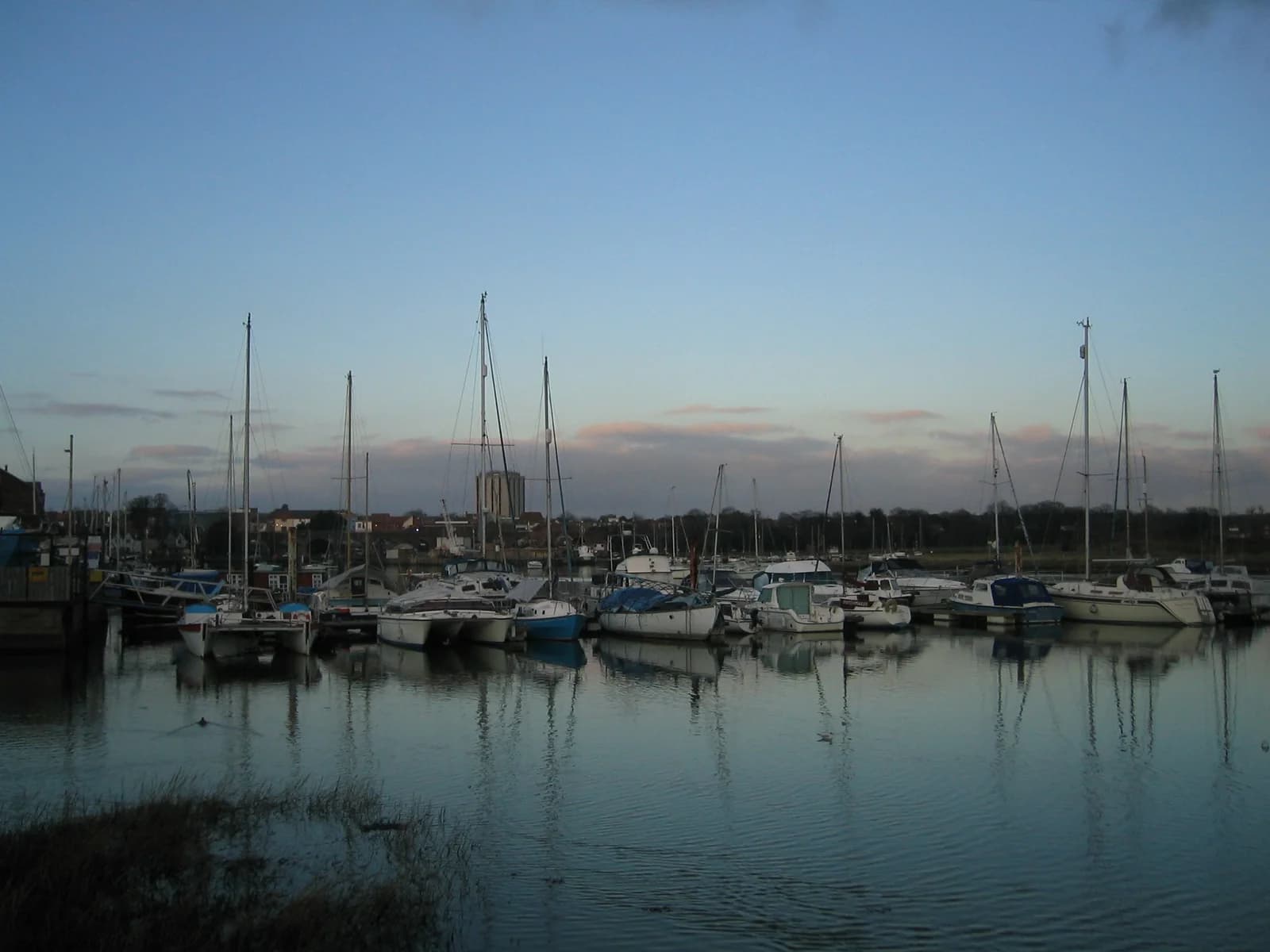
Fareham’s waterfront once handled grain, wine, timber, leather, bricks and pottery. Its creek connected local farms and workshops to trade beyond the town, while markets brought goods and people into the streets. The familiar story of Fareham Reds is one part of a much wider working history.
Grain, wine and cargoes at the quay
Fareham Borough Council’s history describes a medieval port exporting Hampshire grain and receiving French wine. Other imports included coal, salt, hides and bark; outward cargoes included timber, leather, bricks and pottery. The variety matters. This was not a waterfront devoted to just one famous local product.
The cargoes reveal the range of work connected to the waterfront: agricultural produce, building materials and the products of local industries. Fareham’s trading connections reached beyond the goods made in the town itself.
Markets in High Street and West Street
The council records a market here from the 12th century. Its account also places a cattle and provision market in central West Street until the 1960s. Fareham’s commercial life therefore involved both the surrounding agricultural area and its waterfront connections.
The market town and the port developed alongside each other. West Street’s market served everyday needs, while the quays connected local production with trade by sea.
Fareham Reds and the Royal Albert Hall
The council describes brickmaking using local clay and continuing in Fareham until 1974. It identifies Fareham Reds in Georgian houses along High Street. Its River Hamble history also records their use in the Royal Albert Hall, which opened in 1871.
That association is worth knowing, but it does not identify the maker of every red brick you pass. A colour match is not a provenance record. Dating an individual wall needs evidence about that building, its alterations and the material itself.
Historic brickwork in High Street
High Street’s Georgian houses are one place to see the town’s brickmaking heritage. Fareham Borough Council identifies Fareham Reds in many of these buildings. Their brickwork connects the story of local industry with buildings still standing today.
Markets and harbour history
Explore today’s local markets, discover how Gosport supported the Navy, or browse more local history.