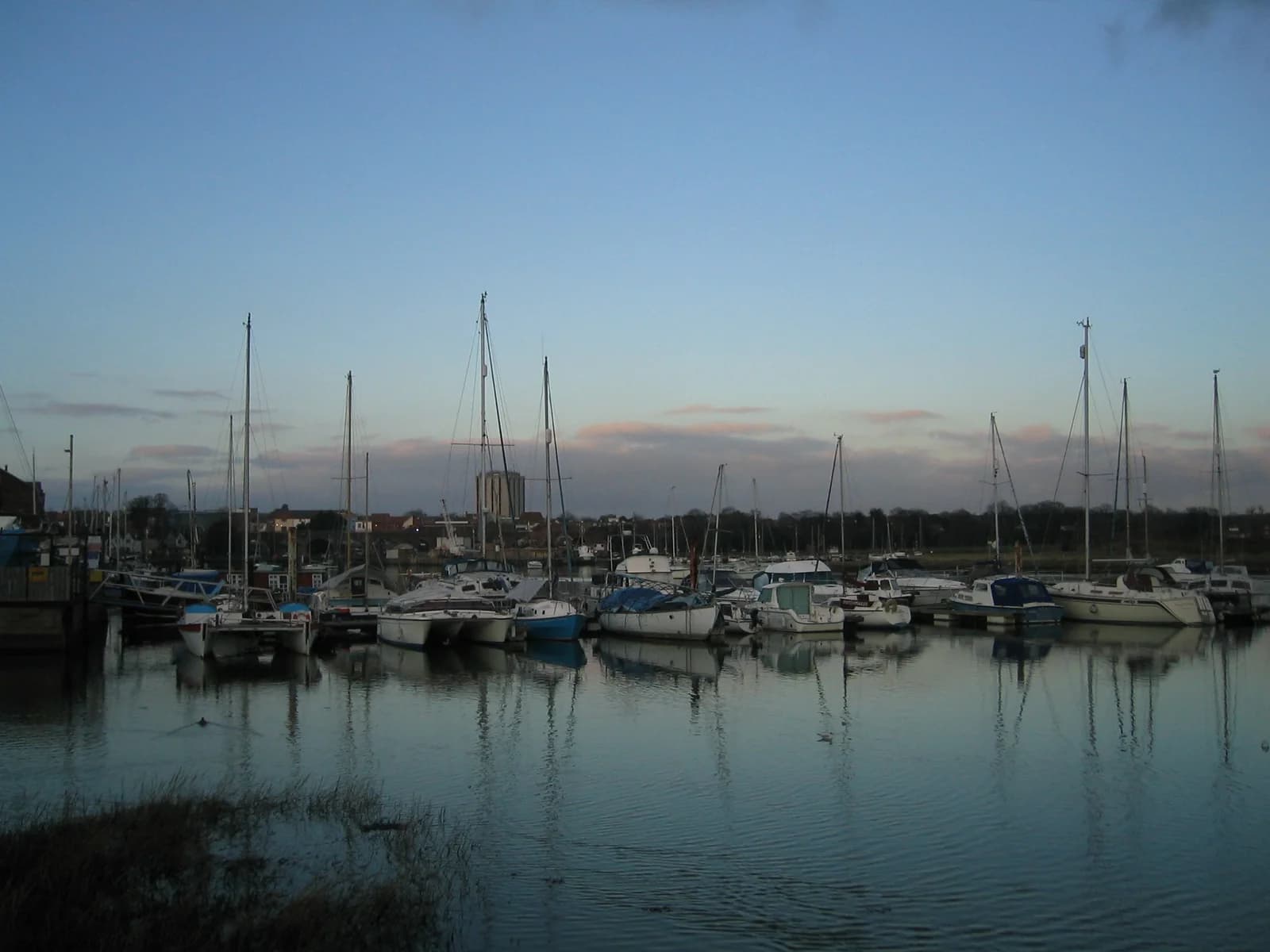
Portchester Castle, September 2023. Tim Sheerman-Chase, CC BY 2.0. Resized and cropped.
Portchester Castle’s keep has housed more than guards and prisoners. In 1810, French captives turned a room inside the tower into a working theatre. A castle being used to confine people became a place where those same people could build scenery, make music and perform.
The story adds another layer to a familiar local landmark. The building was already centuries old when the prisoners arrived. Portchester had been used to hold foreign prisoners from 1665; the wars with Revolutionary and Napoleonic France made that role especially important. The theatre belongs to this later history, rather than to the castle’s medieval life. [1]
French prisoners built a stage in 1810
English Heritage dates the arrival of the group behind the theatre to 20 September 1810, following captivity on Cabrera, off Majorca. They began constructing their theatre soon afterwards. [2]
Jean-François Carré brought professional stage experience from Paris. Captain Paterson, who commanded the prison, supplied timber for the work. Warwick’s account identifies Carré as a stage technician before his military conscription. This was skilled theatrical work undertaken in captivity, rather than simply prisoners finding an empty room in which to speak a few lines. [3]
Stage machinery changed what the prisoners could perform
Research at the University of Warwick uncovered archival evidence of a trap door and a fly system for lifting and lowering stage elements. The researchers also describe a mechanism for carrying a theatrical cherub towards the boxes. Such findings supported descriptions in prisoners’ accounts that had previously been treated as exaggerated. [4]
The documented equipment suggests a theatre that relied on scenery, effects and skilled backstage work as well as acting.
Roseliska brought the prisoners’ own writing to the stage
The captives performed existing French works and created plays of their own. One surviving melodrama, Roseliska, became central to the later research and performance project. Warwick’s School of Modern Languages and Cultures describes its collaboration with English Heritage and the historical performance company Past Pleasures, which brought the play back before a local audience in July 2017. [3]
This does not turn the modern performance into a recording of the original. It shows how written evidence, music research and performance can help people understand a theatre whose original activity cannot be watched again.
The recreated stage is not the original wooden theatre
English Heritage explains that the original wooden stage did not survive. Its recreation drew on memoirs, the governor’s documents and a prisoner’s drawing. Local people had initially been admitted to the prisoners’ performances; after a closure, the theatre reopened with its audience restricted to the prisoners and garrison. [2]
That distinction matters when looking at the castle today. The historic room and the later interpretation tell different parts of the story. Warwick’s research fed into the interpretation installed in the keep in 2017. [4]
Plan a Portchester visit around the parts you want to see
For admission, current opening arrangements and access information, use our Portchester Castle visitor guide and English Heritage’s current visitor pages. The theatre’s history is not a promise of a live performance on the day you visit.
For another building with more than one life, read about Titchfield Abbey’s transformation into Place House. Find the rest of the series in local history.